
Reframes: There is No Box
Creative thinking changes the frame of reference, and changing your frame changes your focus. Reframes to set the example, and a template to make your own in 4 easy steps.

At the time of writing, I recently finished Scott Adam’s book, Reframe Your Brain, which is all about reframing your perspective and how you think about things, in order to change some aspect about your life.
In the process of reading the book, I realized I’ve created my own reframes of reality. Some I had already put into words. Others, I wrote as “new” reframes, because I wanted to communicate the perspective I already had.
Frame of Reference
Put in non-physics terms, a frame of reference is the perspective relative to an observer viewing an experience—who may or may not be a participant in the experience.
It’s how you view reality.
Changing your frame of reference does not change reality. But it does change your view, and possibly your experience, of it.
That said, if you change your view and experience of something, you’ve changed your reality, so to speak.
Reframing Attitude
Changing your perspective requires changing your thinking. And reframing your thinking reframes your attitude.
Attitude determines how you approach something (look up what a “self-fulfilling prophecy” is). And how you approach something changes your perspective.
In short, “reframing reality” has the potential to snowball success. You just have to believe it, and live it—with confidence and consistency.
The Reframes
Now that we’ve set the stage, on to the reframes.
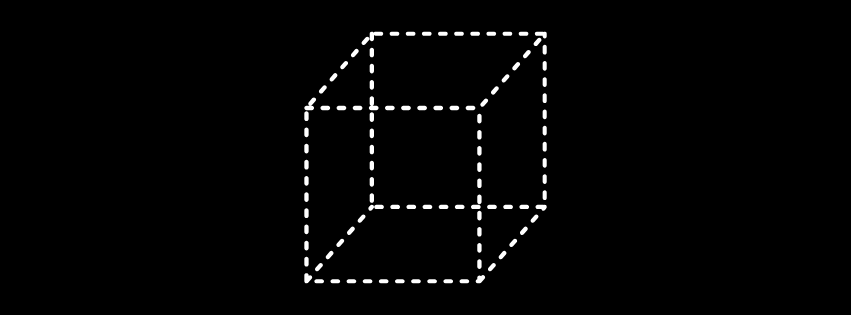
There is No Box
Usual: Think outside the box.
Reframe: There is no box.
Because accepting the box means accepting limitations—accepting a scarcity mindset. We’re limited by what we accept.
This does not mean constraints are not real, or that we shouldn’t be aware of the obstacles to overcome.
There is no box sets you free to use what you have in new ways. Whether talents, resources, or even the constraints themselves.
If faith can move mountains, a box is nothing.
Take Stewardship
Usual: Take ownership.
Reframe: Take stewardship.
Because everything we have was given to us by our Creator.
Now that we know there is no box, we take stewardship of what’s been set free.
Accountability and legacy are what this reframe provides. When you take ownership, you’re only responsible to yourself. When you take stewardship, you answer to God, and your kids, and your grandkids, and to the generations that come after you.
Parenting is a great illustration. We can take ownership of our role—or we can take stewardship, and realize our kids will grow up to make their own decisions. We’re answering to the Creator of the universe who entrusted our children’s lives to us. And we’re answering to our kids when they’re grown.
The sense of scale and impact makes a dramatic shift when we realize we’re stewards.
Gratitude is Glue
Usual: Gratitude is good.
Reframe: Gratitude is glue.
Because thankfulness holds it all together.
You may have never heard the usual frame here (or at least not often), but it’s something we all know is true. Gratitude is good, right? The reframe does not discount this—gratitude is still good, but it’s also something more: it’s glue.
Colossians 3:15 (NIV) illustrates this perfectly:
Let the peace of Christ rule in your hearts, since as members of one body you were called to peace. And be thankful.
Thankfulness—gratitude—holds the peace together.
The reframe, Gratitude is glue, takes the value of gratitude from concept to concrete.
Talent is Energy
Usual: Talent is tangible.
Reframe: Talent is energy.
Because you can’t manage a talent beyond doing or not doing. But you can manage energy.
(This is another reframe where the point is not to be literal, but to grab the concept.)
Talent is tangible isn’t something we say, as much as something we believe. When we think of talent, we think of something people possess. Your talents are yours, aren’t they? Even if you’re stewarding them?
Again, the point is not to “disprove” the usual frame—it’s to shift the perspective.
In Reframe Your Brain, Adams reframes “Manage Time” to “Manage Energy.” This reframe builds off of that.
Talent is energy you can manage, or steward. Use your talent—your energy—when it’s most effective.
Do you write better in the morning? Manage your writing talent by writing in the morning.
This is how you “take stewardship” to manage your energy, your talent.
Systems are Poems
Usual: Systems are boring.
Reframe: Systems are poems.
Because a poem is a system.
Systems are Poems combines Take Stewardship and Talent is Energy into a tangible, transferable skill.
If you’re a systems person, this reframe could help you appreciate poetry (or art) more—systems are poetry means a poem is a system.
If you’re a poet (or an artistic person), it could set you free to embrace the “left-brained” expressions of your talent. And be a huge ticket to success in work and business.
Write Your Own Reframes in 4 Steps
Systems are poems is a great reframe to use as a template to make your own, with your unique talents and interests.
Start with the reverse order: Poems are systems. Next, work with if/then logic: If poems are systems, then systems are poems. It doesn’t have to be literally true. It just has to “make sense” in a way you can feel.
And it needs to be memorable.
I’ve included potential reframes as examples.
Step 1: Your Talent
Now, take something you know you’re good at and that you love doing. This covers the mindset (know) and the emotions (love).
_____ are/is _____.
Poems are _____.
Art is _____.
Jiu-Jitsu is _____.
Sprinting is _____.
Step 2: Your Job
Then, take the thing you have to do, maybe don’t want to do, but need to do. Could be work or life responsibilities. Something that if you get good at, it will advance your vision. And you know you need to change your thinking and/or attitude around it.
It’s ok if the phrase sounds counter-intuitive. (Step 4 brings it home.)
Poems are systems.
Art is engineering.
Jiu-Jitsu is relaxation.
Sprinting is data.
Step 3: Uno Reverse
Now, reverse the order. It may sound even more abstract, but that’s ok for now.
Systems are poems.
Engineering is art.
Relaxing is jiu-jitsu.
Data is sprinting.
Step 4: Why? Because
To cap it off, add a because statement. This is self-persuasion. Your because takes the phrase from concept to concrete—it gives you a reason to be grateful, so to speak.
Poems are systems. Because poetry has structure.
Engineering is art. Because art has layers.
Relaxing is jiu-jitsu. Because jiu-jitsu is breathing and flow.
Sprinting is data. Because sprinting is form and function.
Bonus Step: The Usual
This is a bonus step, because you don’t need it unless you want to better articulate your reframe. It’s your intuitive reason for needing the reframe in the first place.
Systems are boring. → Systems are poems.
Engineering is math. → Engineering is art.
Relaxing is hard. → Relaxing is jiu-jitsu.
For the tense, go-getter who does jiu-jitsu but finds it hard to rest, this could change how they think about rest. Even though you go “all out” when sparring (rolling, as its called), you have to “relax” to do well.
Data is awful. → Data is sprinting.
Sprinting is all about form, and form leads to function. For someone who loves sprinting, in those fast few seconds, they’re still processing data. For someone who loves sprinting, this could change their process-approach towards handing data. The speed part is irrelevant—the focus would be on data in terms of formatting (form) and interpreting (function).
Innovate Your Own Personal Reframes
Feel free to take my reframes and make them your own. Maybe you’re not a poet, but you love cooking: Systems are recipes?
And now that you’ve got the recipe, what kind of reframes will you come up with?
These reframes echo something we teach in creative problem-solving: constraints don’t limit creativity, assumptions do. The moment you name the frame, you gain agency over it. From there, ideas move different. People do too.